
Composite Door
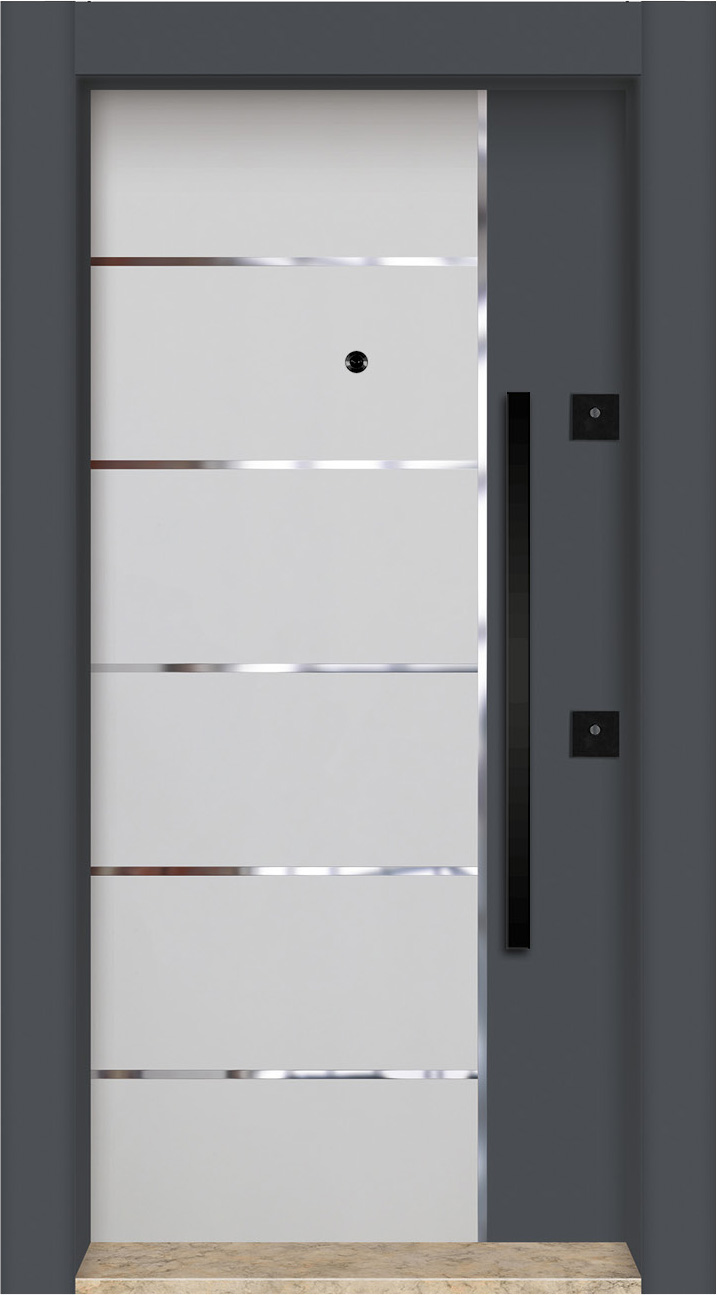
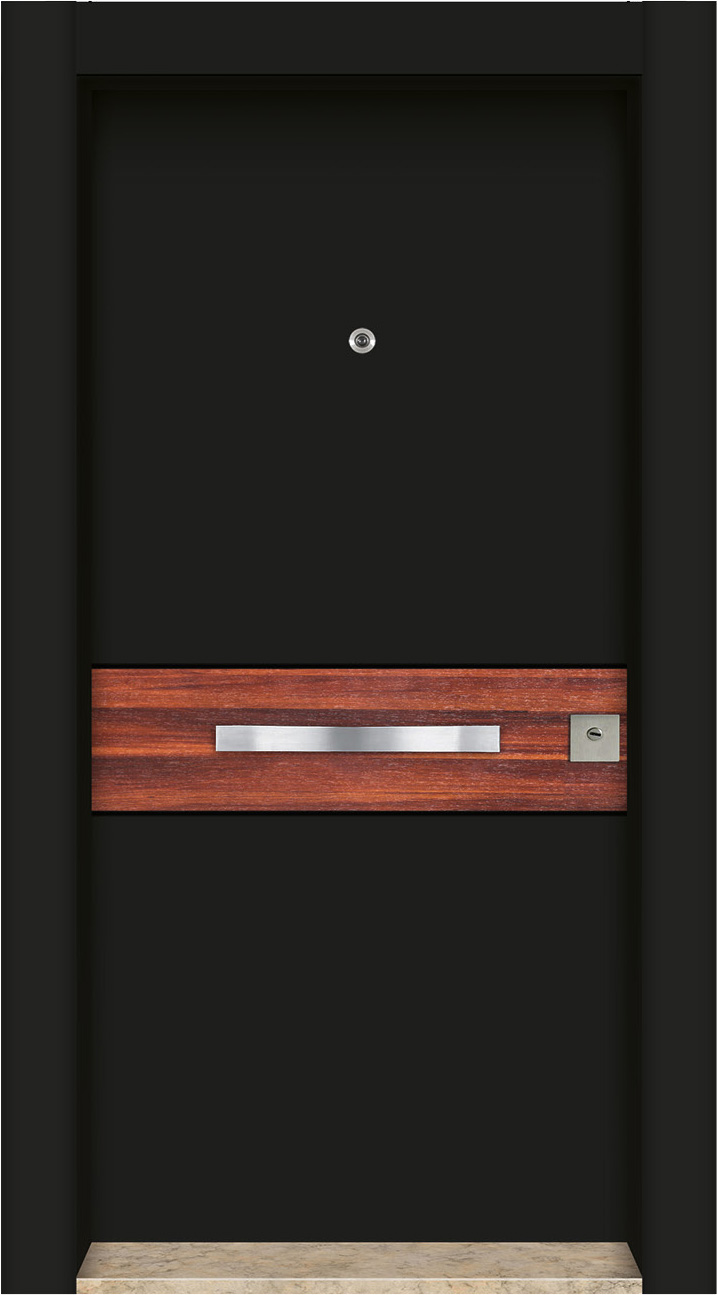
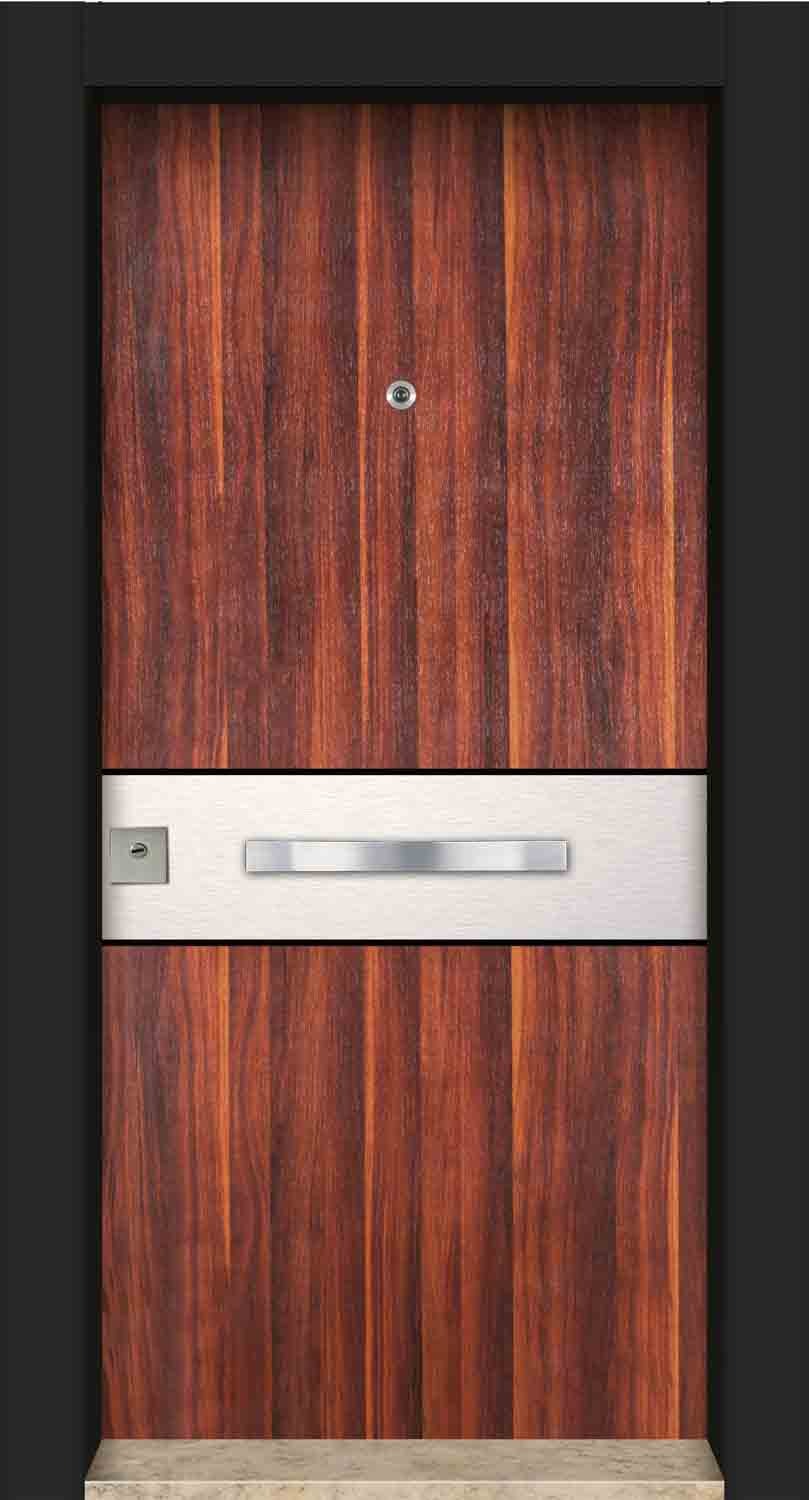
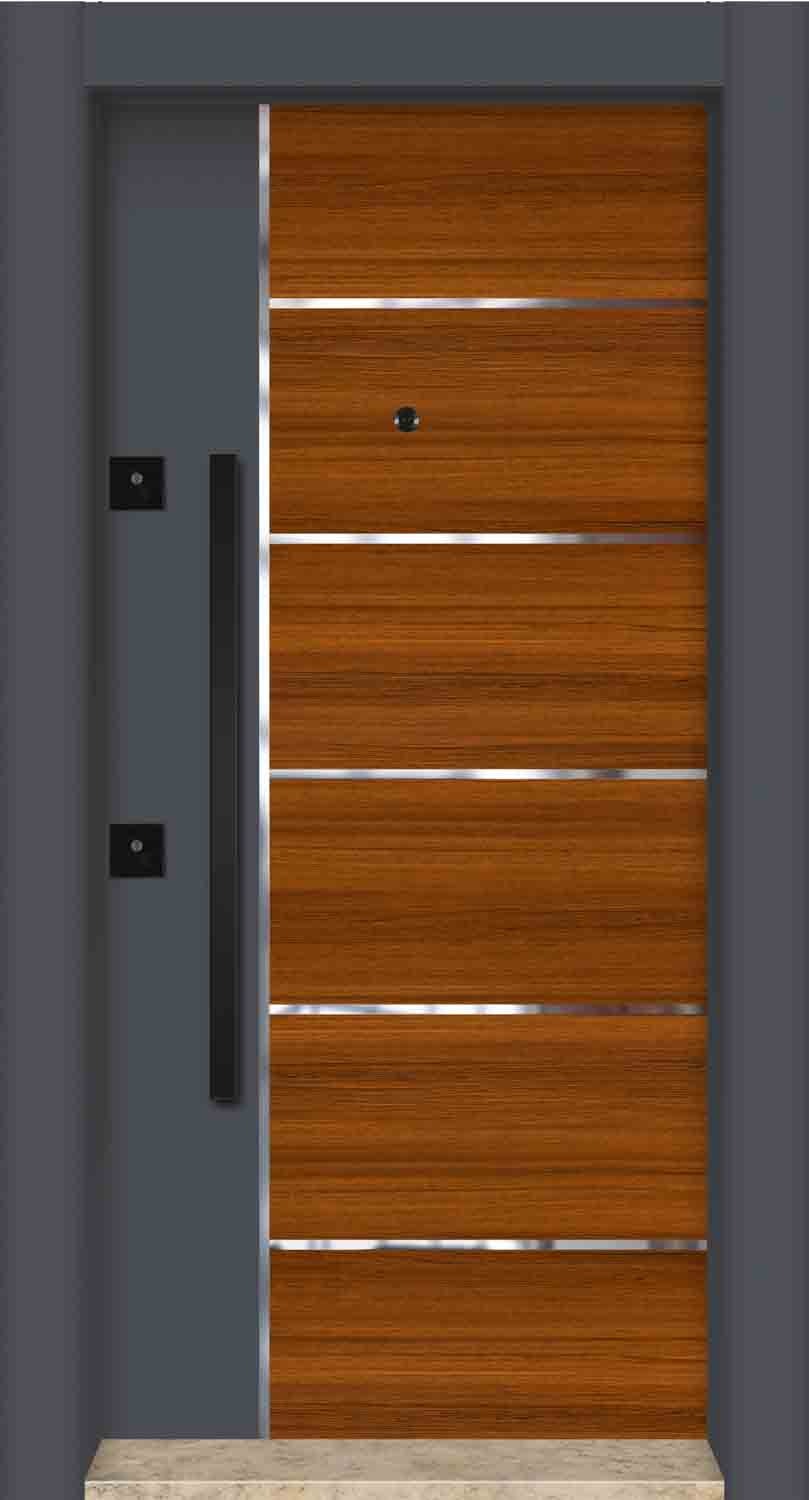
What is a composite door (what does a composite door mean)?
Doors produced using composite formed by combining more than one material are called composite doors. The door is more durable, denser and stronger. Some countries like Palestine, Sudan, Ethiopia, Saudi Arabia, Nigeria and Ghana prefer this type of doors. We can advise this type to other countries like Morocco, Irak and Libya.
A composite door is manufactured to create a great entrance for your home. Around the wood material you will get durable layers of PVC and other completely weatherproof materials that protect the wood from wind and rain. As a result, your door will perform for decades without fraying, warping or fading, and the design will continue to look its best.
They offer superior performance as well as modern or traditional aesthetics uniquely designed for your home.
The most common problem for us in the doors used in living spaces in our country is the rapid wear of the doors. Composite door, on the other hand, is the door model that eliminates this problem and is the best in terms of technology. Nowadays, composite doors are highly preferred, when it comes to composite, composite materials are used as they are resistant to external weather conditions, and even for design purposes and durability.
Composite doors tend to be thicker than uPVC and are considered a stronger, safer and energy efficient choice. However, they usually come at a higher cost.
What Are the Advantages of Composite Steel Doors?
Composite steel doors combine the structural strength of steel with decorative composite surface materials. This structure makes it possible to create entrance doors that offer both a strong body and a modern exterior appearance. The exact performance of the door depends on the steel construction, locking system, panel structure and the type of composite surface used.
One of the main advantages of composite steel doors is design flexibility. Different colors, textures and panel patterns can be applied to the outer surface, allowing the door to match modern, classic or minimalist architectural styles. Composite surfaces can also be combined with glass, metal details and different handle designs.
- Strong steel body structure
- Wide range of surface and design options
- Suitable for modern entrance designs
- Can be combined with glass and metal details
- Different color and texture alternatives
- Can be produced for different entrance dimensions
A composite surface should not be considered the main security element of the door. Security performance depends primarily on the steel body, frame, lock system, hinges and installation quality. Composite panels mainly contribute to the surface design and exterior appearance of the door.
Composite Panel Door Models
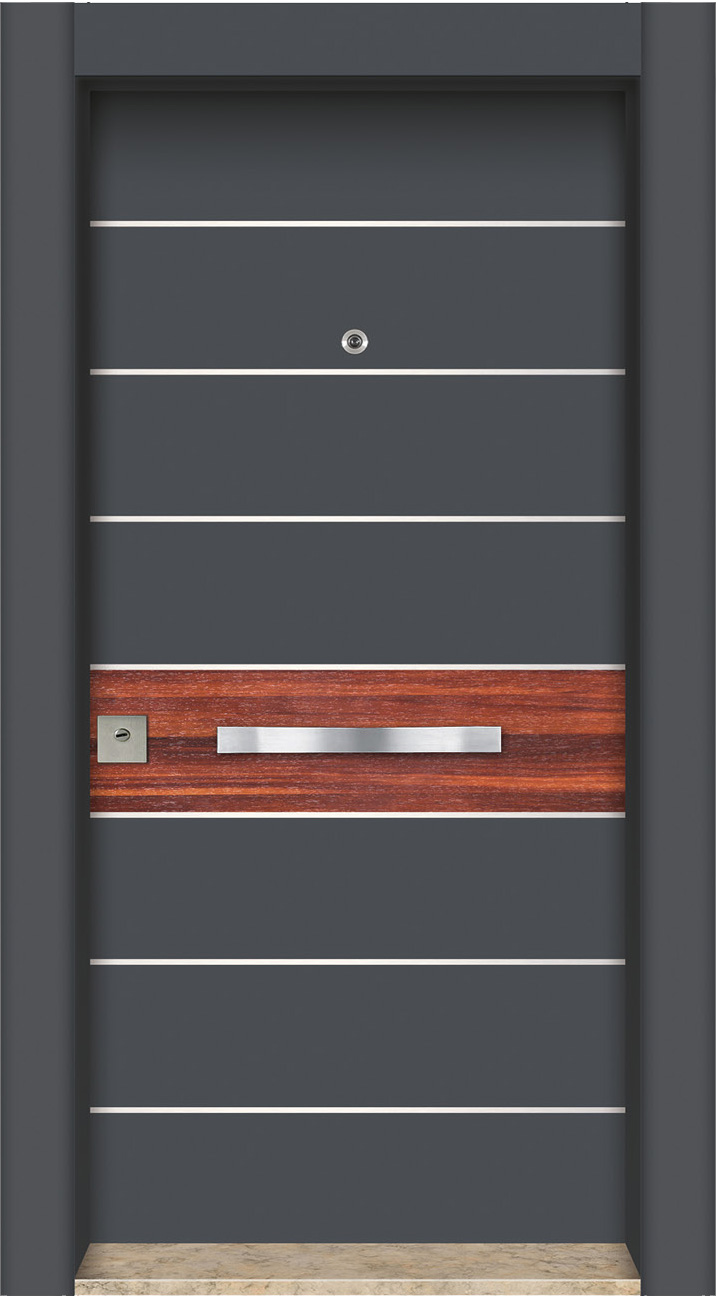
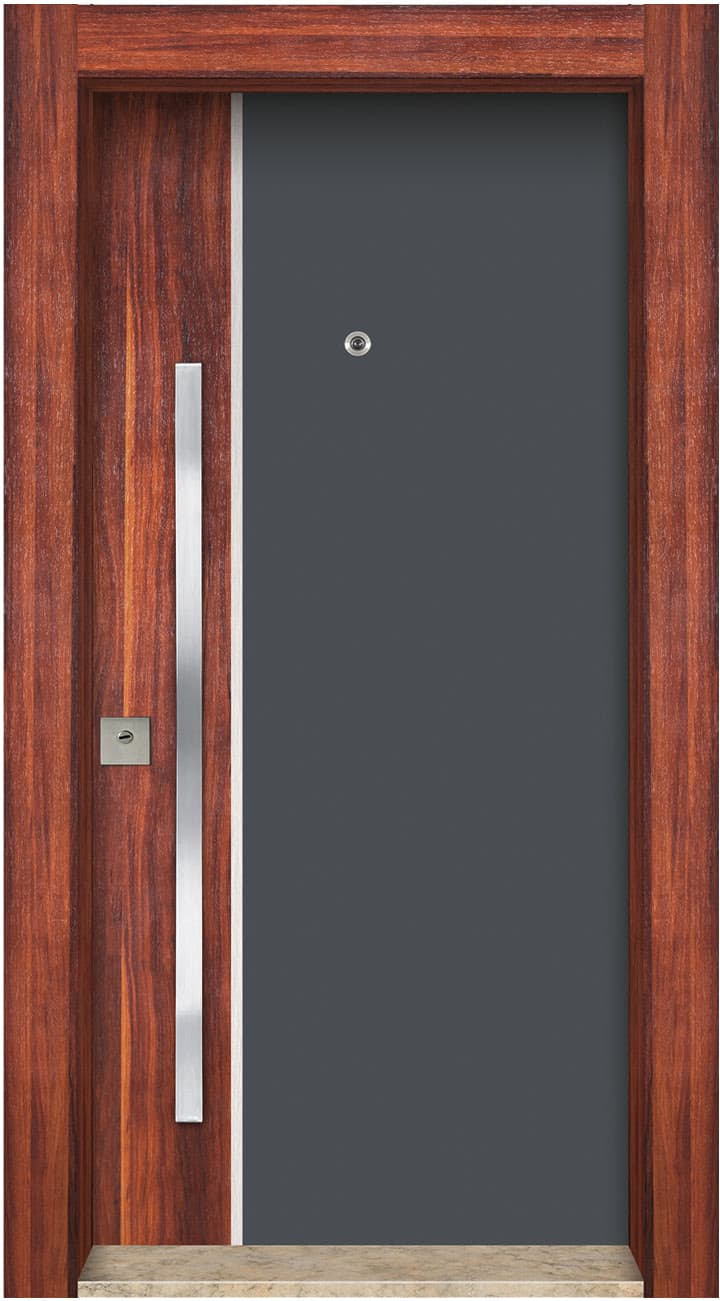
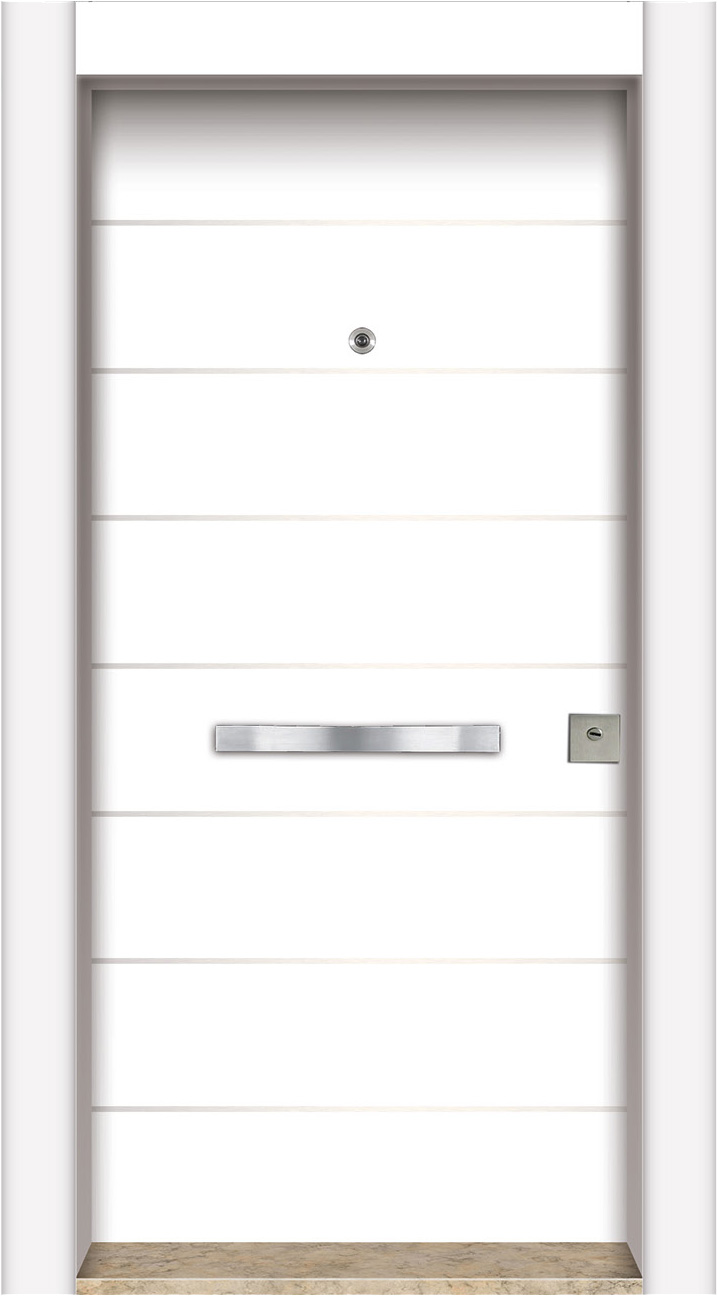
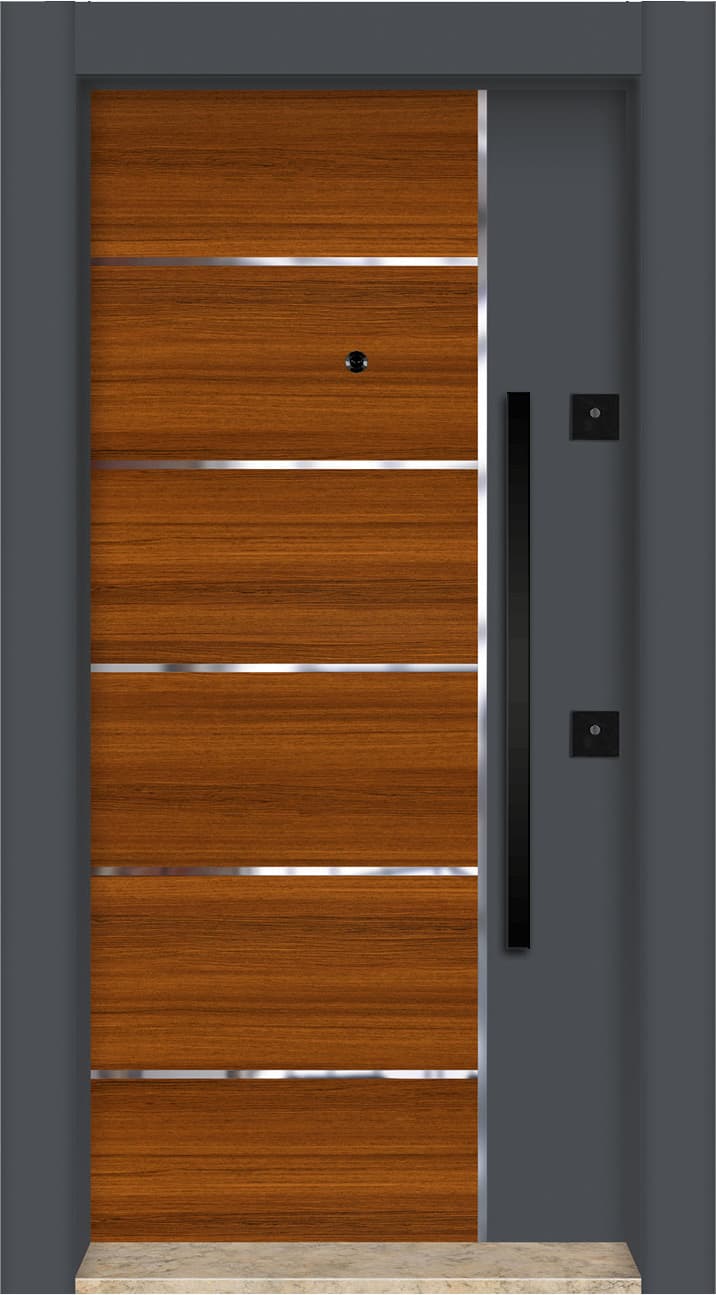
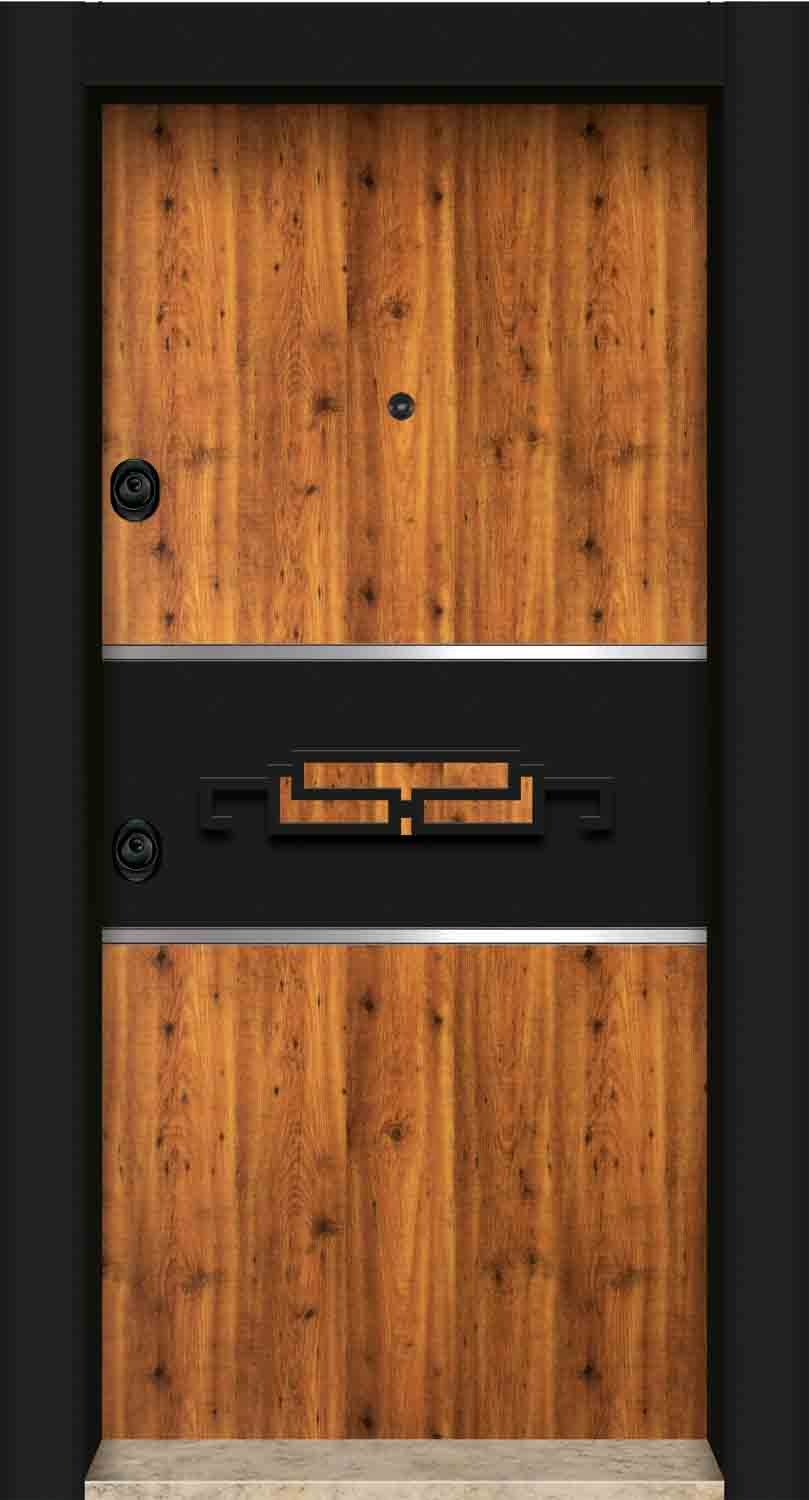
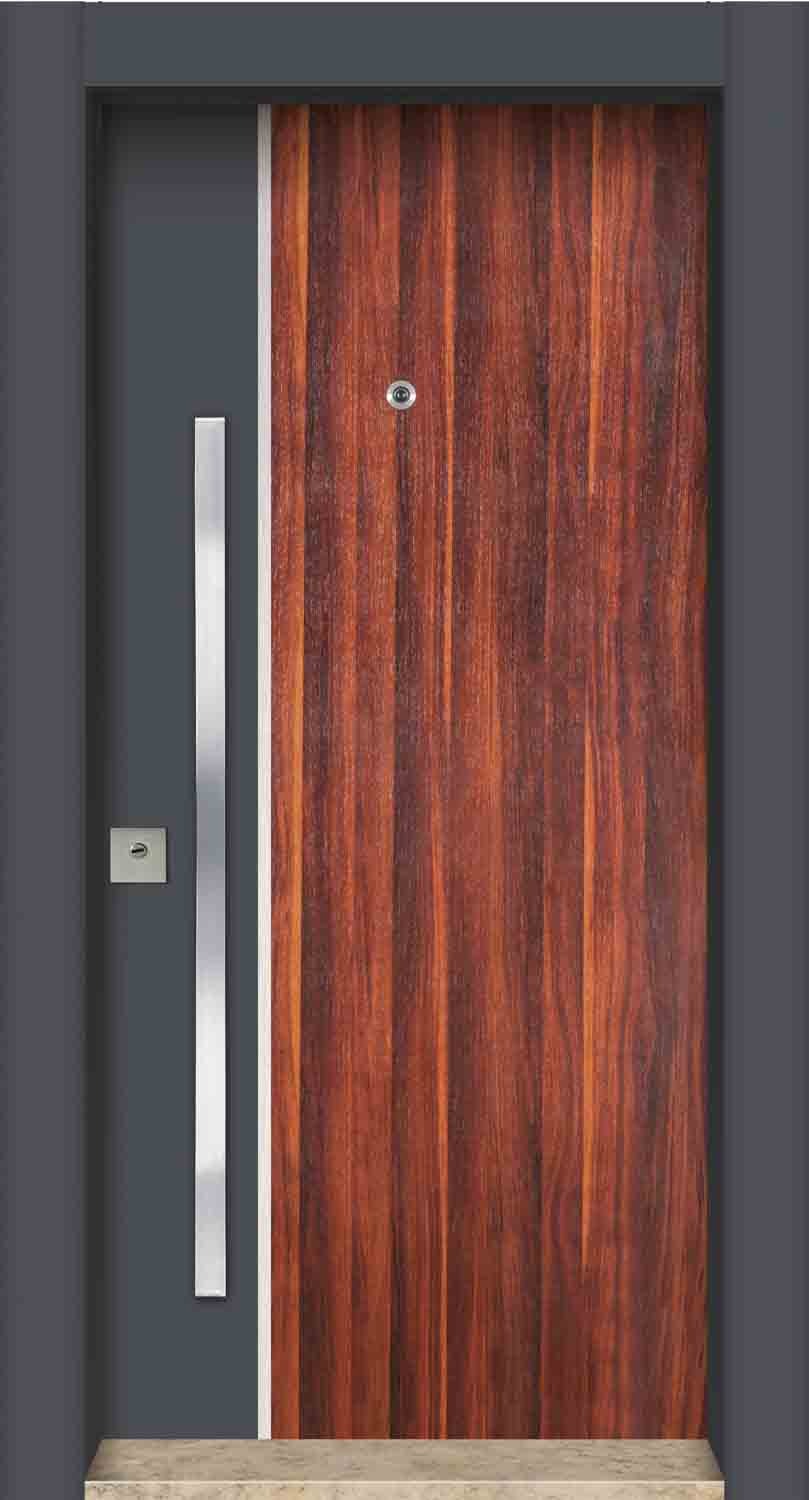
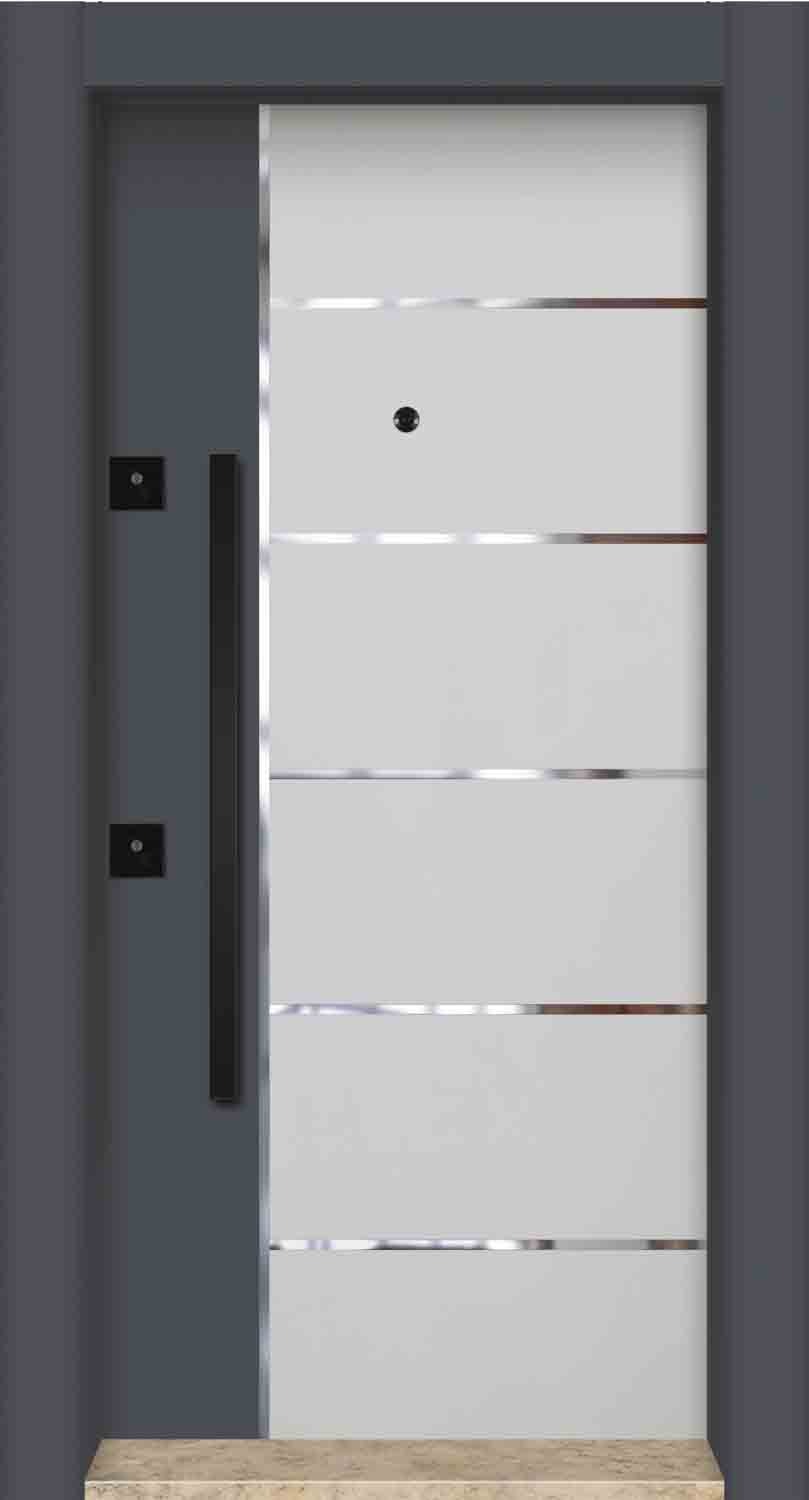
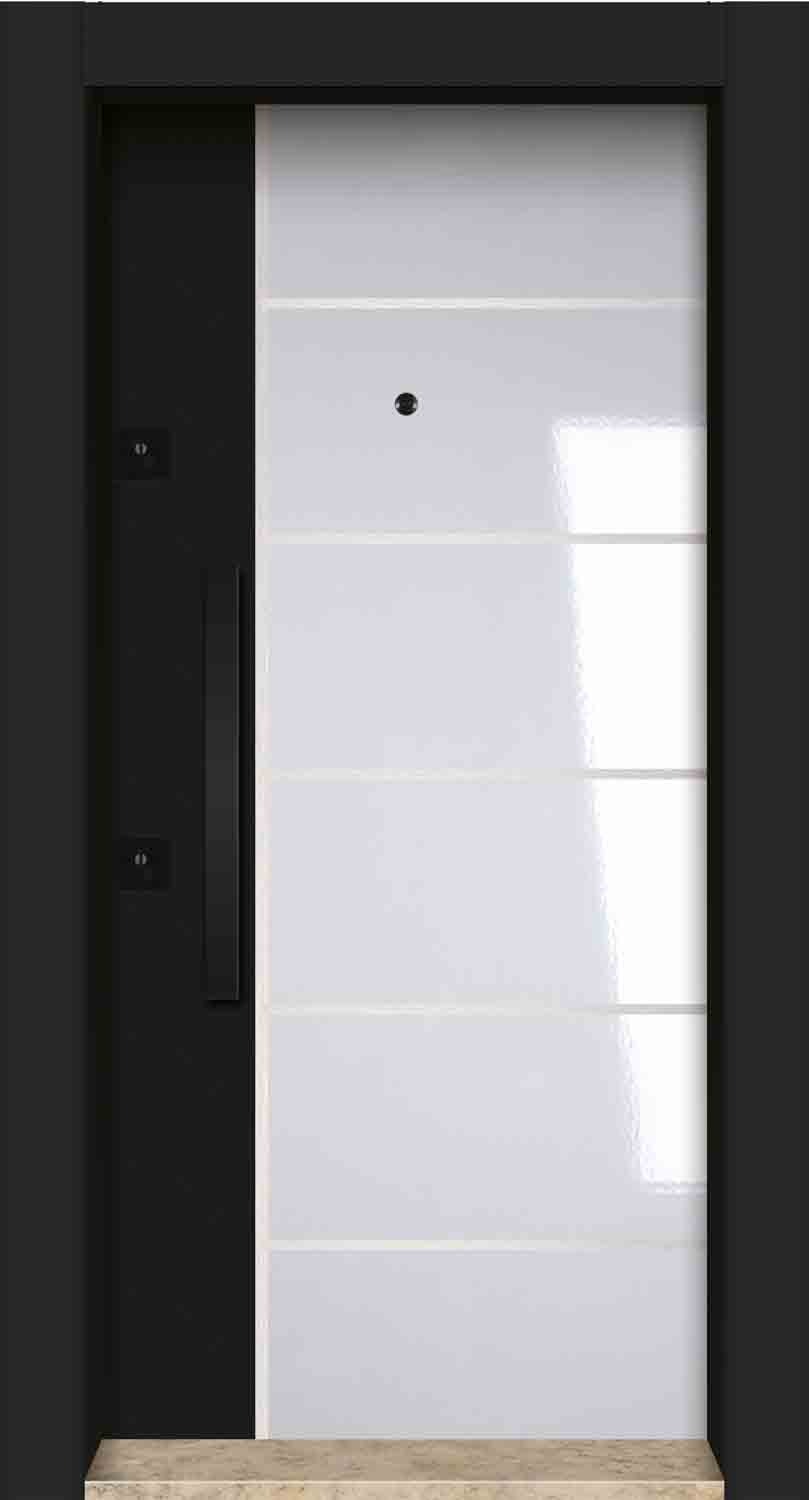
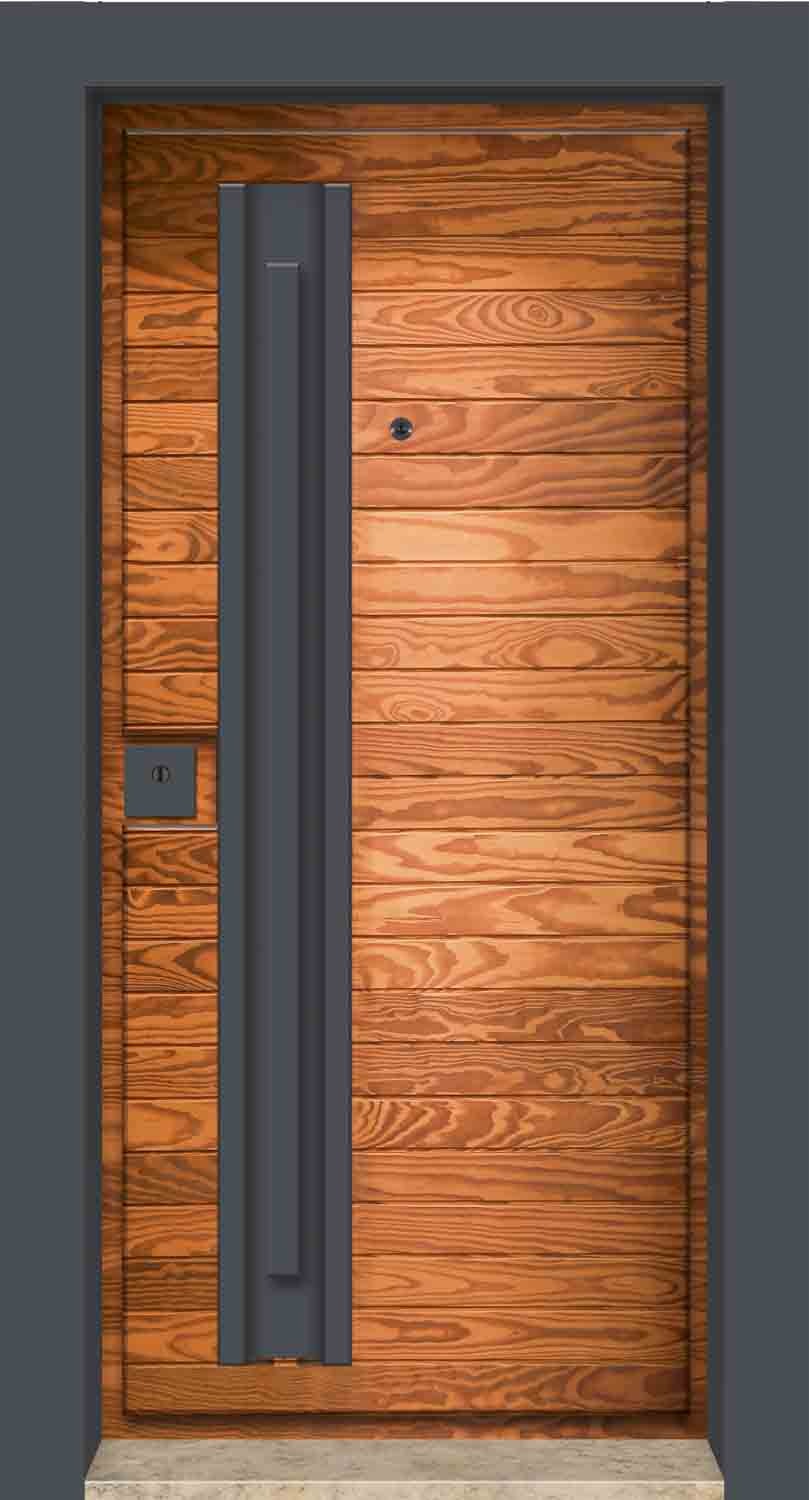
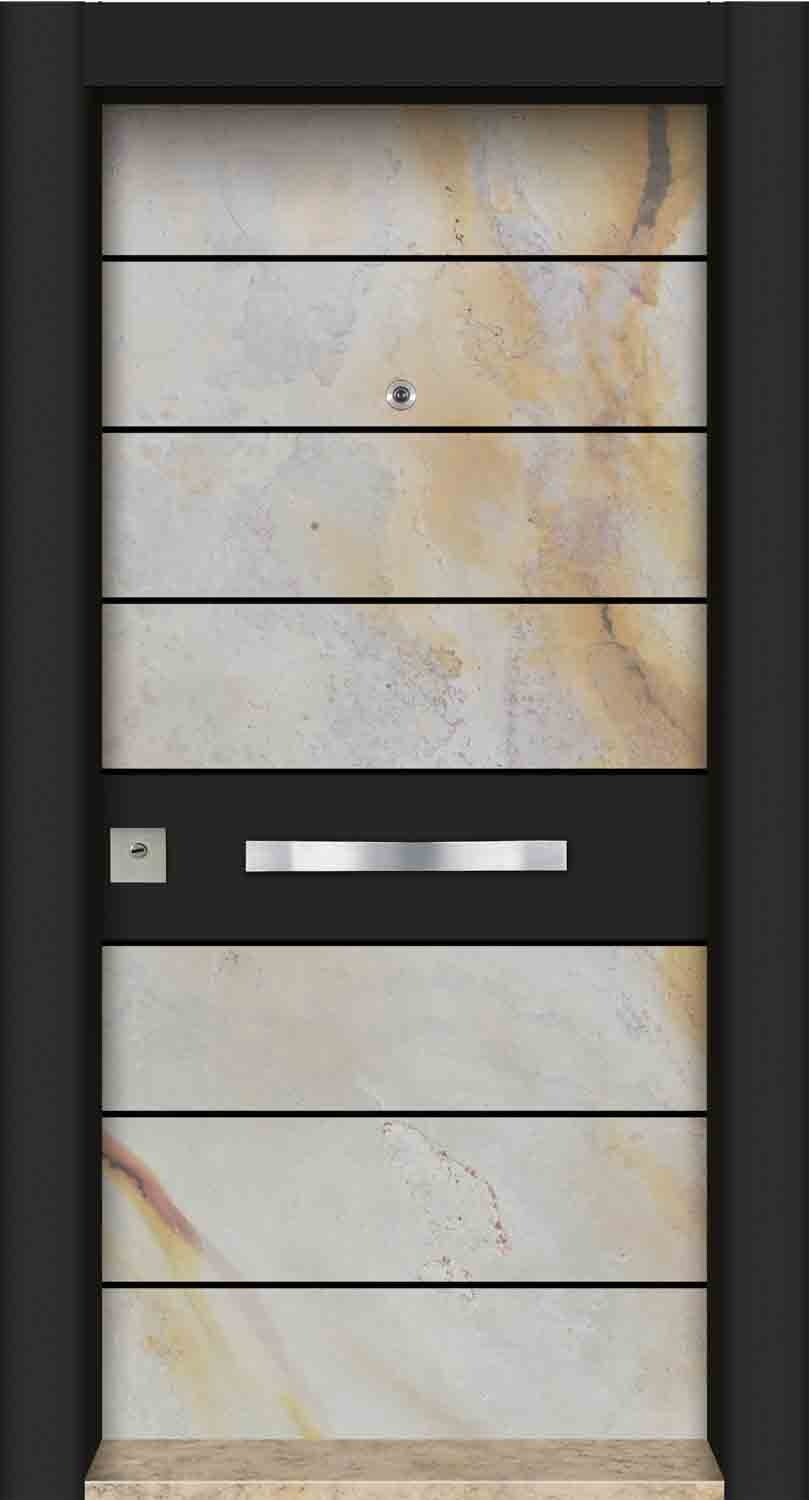
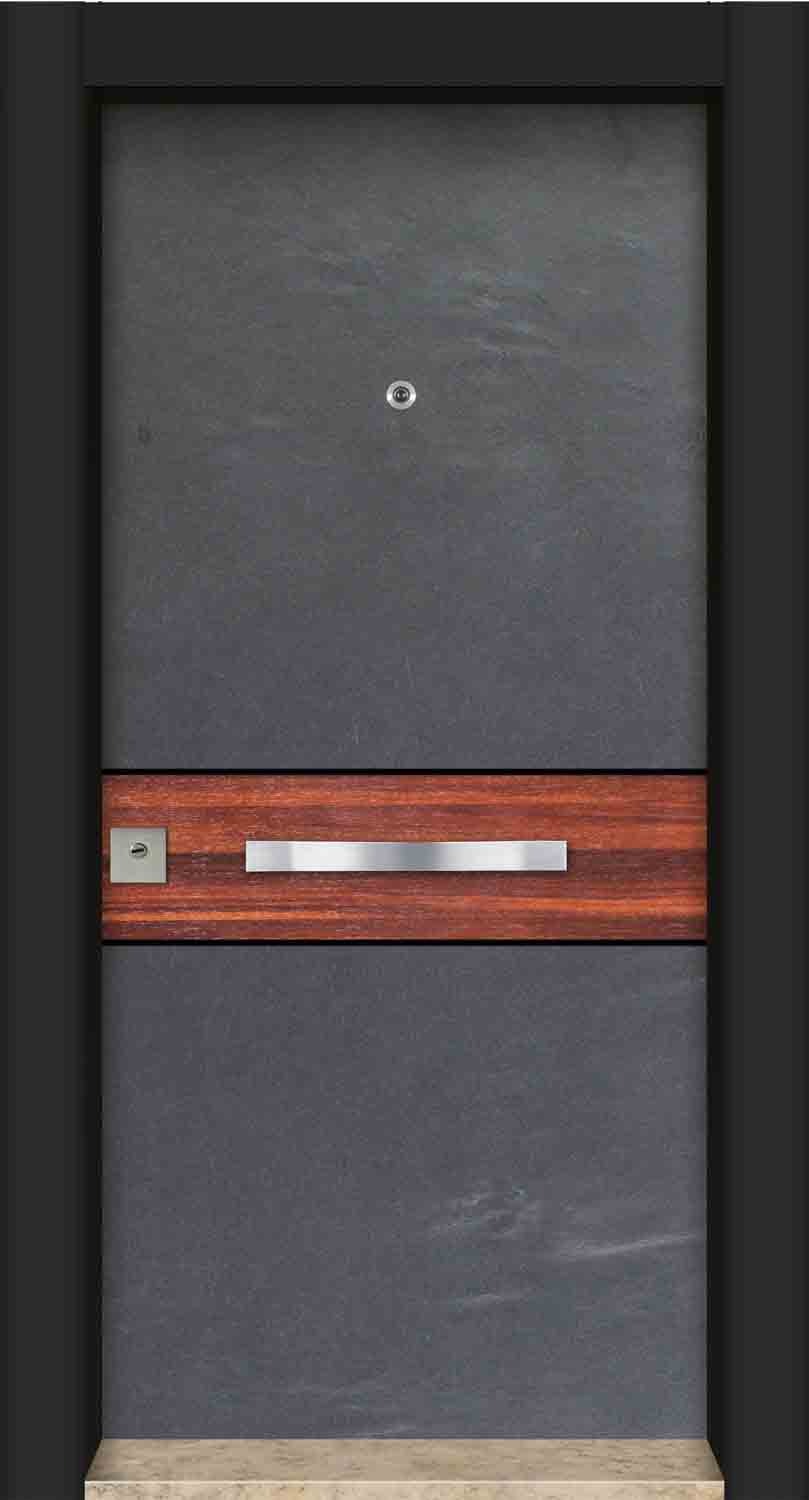
Composite panel door models are generally designed by applying decorative composite panels over a steel door structure. The panel design can vary depending on the model, intended use and architectural style of the building. Flat surfaces, geometric details, vertical lines, horizontal patterns and wood-look textures are among the common design approaches.
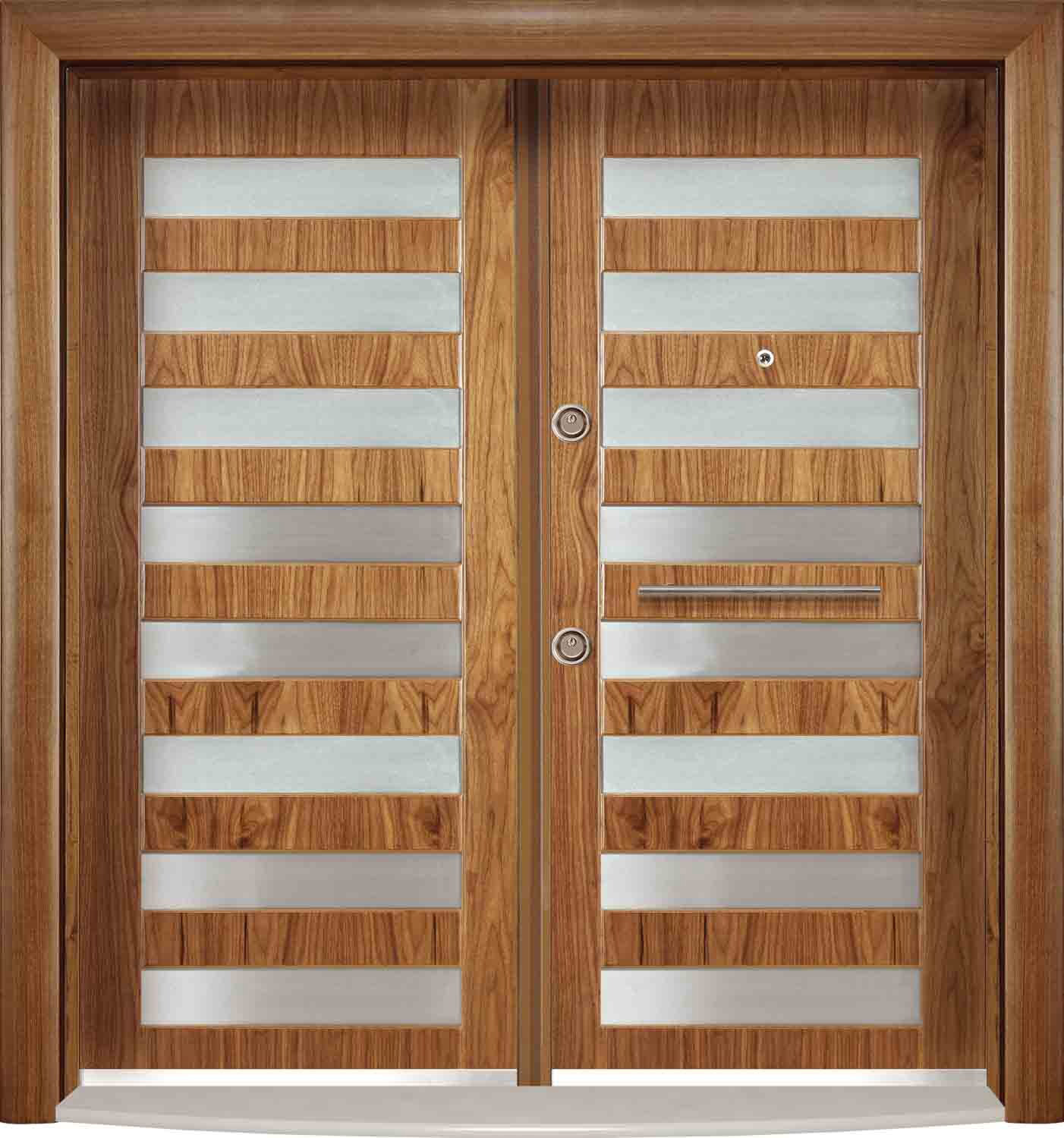
Composite panel doors can be used in villa entrances, detached houses, apartment entrances and other residential projects. Single-leaf or double-leaf designs may be selected according to the width of the entrance opening.
- Flat panel composite doors
- Wood-look composite panel doors
- Modern geometric panel designs
- Glazed composite entrance doors
- Double-leaf composite doors
- Custom-sized composite panel doors
The most suitable model should be selected by considering the entrance dimensions, facade design, preferred color and the environmental conditions of the installation area.
Are Composite Steel Doors Suitable for Exterior Use?
Composite steel doors can be suitable for exterior use when the selected surface material and production configuration are designed for outdoor conditions. Exterior doors may be exposed to sunlight, rain, humidity, wind and temperature changes, so the technical properties of the composite panel should be considered before selection.
Not all composite materials have the same resistance characteristics. Some composite panels are produced for exterior applications, while others may be more appropriate for protected areas. For this reason, the term “composite” alone is not enough to determine whether a door is suitable for direct outdoor exposure.
The position of the entrance also affects material selection. A door installed under a canopy may be less exposed to environmental conditions than a door positioned directly on an open facade.
How Durable Are Composite Steel Doors?
The durability of a composite steel door depends on several components rather than a single material. The steel body, frame structure, locking system, hinges, composite panel and installation quality all affect the overall performance of the door.
Composite surfaces can offer good resistance in daily use depending on the material type and production quality. However, scratch resistance, moisture resistance, UV performance and impact resistance may vary between different composite panel systems.
For this reason, the durability of a composite steel door should be evaluated according to the actual product specifications and installation environment. A door used inside an apartment building and a door installed directly outdoors may require different surface characteristics.
What Should You Consider When Choosing a Composite Steel Door?
When choosing a composite steel door, the first step is to determine where the door will be installed. The requirements of a villa entrance, detached house, apartment door or building entrance can differ in terms of dimensions, surface material and environmental exposure.
The security structure should also be evaluated separately from the surface design. The door body, frame, lock system, hinges and installation details are more important for security than the decorative composite panel itself.
- Installation area and exterior exposure
- Steel body and frame structure
- Locking system
- Composite panel type
- Color and surface design
- Door dimensions
- Single-leaf or double-leaf configuration
- Installation conditions
Different steel door models can be reviewed according to the project requirements, entrance dimensions and preferred surface design.
Composite Steel Door Manufacturing
Composite steel door manufacturing generally begins with the production of the steel body and frame. The locking system, hinge points and structural components are then integrated according to the selected door configuration. Decorative composite panels are applied to the appropriate surface areas as part of the final design.
Production details may vary according to the door model, dimensions, panel type, glass design and accessory selection. Custom projects may require different measurements, panel combinations or double-leaf structures.
The manufacturing process should consider both structural requirements and surface compatibility. Composite panels must be applied according to the characteristics of the selected material and the intended installation environment.
What is Composite Door Made of?
A composite door is made of several materials. In essence, composite doors have a solid wood section that gives the design its strength. Not only that, wood is a natural insulator, meaning less cold air can pass through these doors.
In addition, composite doors have additional layers to protect the wood inside. uPVC is the most common, which is a weatherproof, versatile design. In bad weather conditions, uPVC profiles will retain their appearance longer. This protects the wood underneath from cracking, warping and rotting over time.
Depending on the composite door you are installing, there may be other materials in the design. Layers of lamination often add more strength and help conserve more of your home's natural heat, helping you save on utility bills. Alternatively, some composite doors have a GRP coating. GRP, or glass-reinforced plastic, is incredibly flexible.
Composite Door Features
• Thermally efficient.
• Solid wood core provides a strong defense against breakage.
• Longer lasting and much more durable than wooden or uPVC doors.
• It is easy to clean, maintain and does not require repainting.
• Composite doors are available in a wide range of colors and designs.
• Composite doors are highly resistant to airflow if installed correctly.
• Composite doors are highly soundproof thanks to their thick, multi-layered design.
• Fire resistant composite doors are available.
Things to Consider When Buying Composite Doors
• These doors may inflate in hot weather, especially if the door faces south.
• Typically, composite doors are more expensive than uPVC and wood doors due to more complex manufacturing processes.
Differences Between Steel Door and Composite Door
While both options are aesthetically pleasing and offer a high degree of security, a basic steel door is slightly stronger by design. It also comes with a wider range of security upgrades (thicker steel etc.). Standard steel doors can also withstand higher temperatures and are generally considered safer in the event of a fire than a standard composite door, especially if they are fire certified.
Why Choose Brango Composite Steel Doors?
Brango offers composite steel door solutions for different residential and project requirements. Steel door structures can be combined with various decorative surfaces, colors, panel designs, glass details and custom dimensions depending on the selected model.
Composite door options can be evaluated for villa entrances, detached houses, apartment projects and other residential applications. Customers can compare models according to entrance dimensions, architectural style and surface preferences.
The most appropriate composite steel door should be selected by evaluating the steel structure, surface material, dimensions, locking system and installation requirements as a complete system.
Disclaimer: Composite panel properties, exterior-use suitability, durability, UV resistance, moisture resistance and other technical characteristics may vary depending on the selected material, product configuration and production specifications. Specific performance details should be confirmed for the relevant door model before purchase or installation.
Tag: composite steel door models